


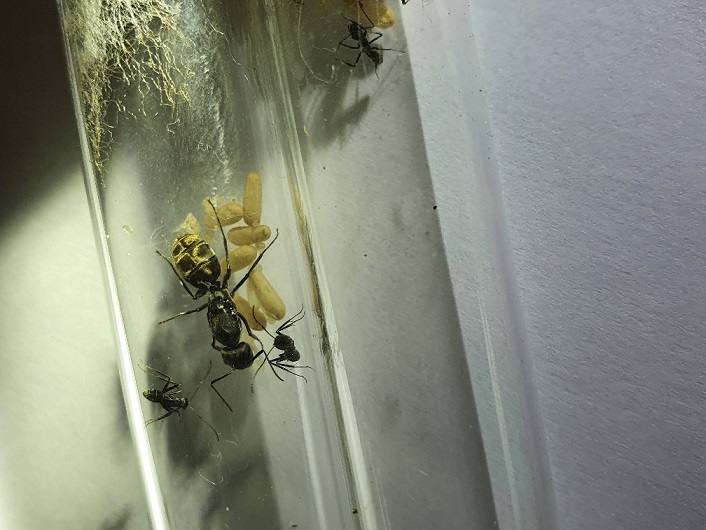
Camponotus cinctellus
A beautiful golden shiny Ant from Africa.
- Taxonomy: Subfamily Formicinae, Tribe Camponotini
- Size: Queen: 14 mm
- Distribution: East Africa
- Nutrition: Honey- or sugar water and insects
- Hibernation: No
- Temperature: 26 - 30 °C (very hot)
- Humidity: dry (veld)
 Camponotus cinctellus a été ajouté à votre panier.
 Camponotus cinctellus ne peut être ajouté à votre panier.
| Colony
- Pas disponible en ce moment with 20-30 workers |


Camponotus detritus
Error in product text, please contact the webmaster to fix this. Camponotus detritus a été ajouté à votre panier. Camponotus detritus ne peut être ajouté à votre panier.| Colony
- 950,00 € - with 60-80 workers |

Camponotus fellah
This is a beautifully colored, vibrant ant species. Remarkable are apart from the color the elongated heads of the workers.
- Taxonomy: Subfamily Formicinae, Tribe Camponotini
- Distribution: Middle east, Northern Africa
- Nutrition: Honey- or sugar water and insects
- Hibernation: No
- Climate: tropical
- Nest building: Soil nests, between stones
- Planting: nothing specific
- Level: easy
Camponotus fellah a été ajouté à votre panier. Camponotus fellah ne peut être ajouté à votre panier.| Petite colonie
- Pas disponible en ce moment Avec premiere ouvrières | |
| colonie
- Pas disponible en ce moment Avec plus ou moins 30 ouvrières |

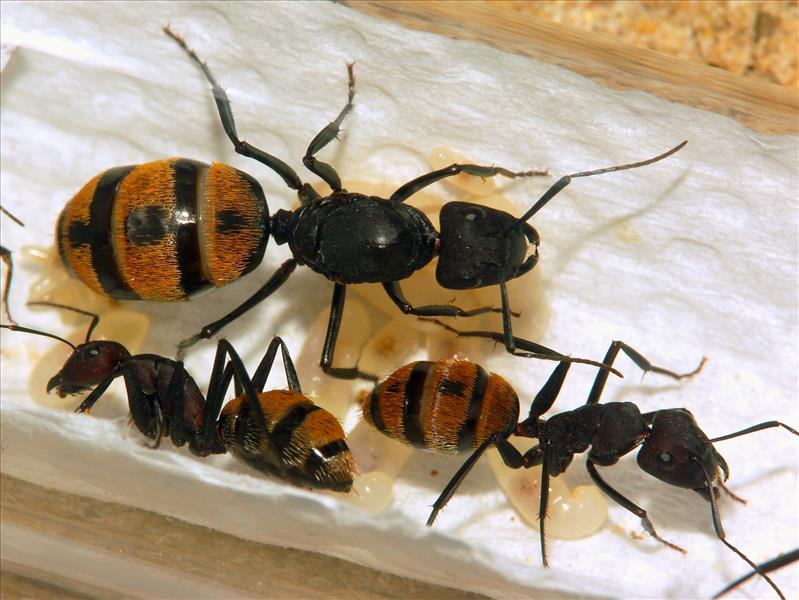

Camponotus fulvopilosus
This is a beautifully colored Camponotus species from southern Africa, which also stands out due to its exceptional behavior. This species lives in steppes and semi-deserts, which is why it's not difficult to keep in captivitiy. A noticeable characteristic is the good eyesight and its impressive size.
- Taxonomy: Subfamily: Formicinae
- Origin: Angola, Namibia, Botswana, South Africa
- Color: black, gaster with dense orange hairs, sometimes interrupted by median bare patches
- Size: Queen: about 17 - 18 mm / Minor: about 9 - 10 mm / Media: about 11 - 14 mm / Major: about 15 - 19 mm
- Dormant phase: in nature from June to end of August, temperatures up to +7 °C at night, up to 20 °C during the day
- Nutrition: honey/sugar water and insects
- Temperature: from warm to very hot: about 24 - 34 °C
- Soil conditions: sandy/rocky soil
- Nest building: porous concrete, plaster or soil nests
- Planting: typical plants of arid areas
- Specifics: very colourful and good eyesight
Camponotus fulvopilosus a été ajouté à votre panier. Camponotus fulvopilosus ne peut être ajouté à votre panier.| Colonie
- Pas disponible en ce moment Avec ca. 50-100 ouvrières | |
| Grande colonie
- Pas disponible en ce moment Avec ca. 1500 ouvrières |


Camponotus maculatus
- Taxonomy: Subfamily Formicinae, Tribe Camponotini
- Distribution: Central Africa
- Color: small ants are yellow till brown, majors are marmorate
- Nutrition: Honey- or sugar water and insects
- Hibernation: No
- Climate: tropical (moist)
- Nest building: Soil nests, between stones
- Planting: nothing specific
- Level: easy
- Specifics: Builds "half" calderas (one sided)
Camponotus maculatus a été ajouté à votre panier. Camponotus maculatus ne peut être ajouté à votre panier.| Petite colonie
- Pas disponible en ce moment Avec plus ou moins 5-10 ouvrières |
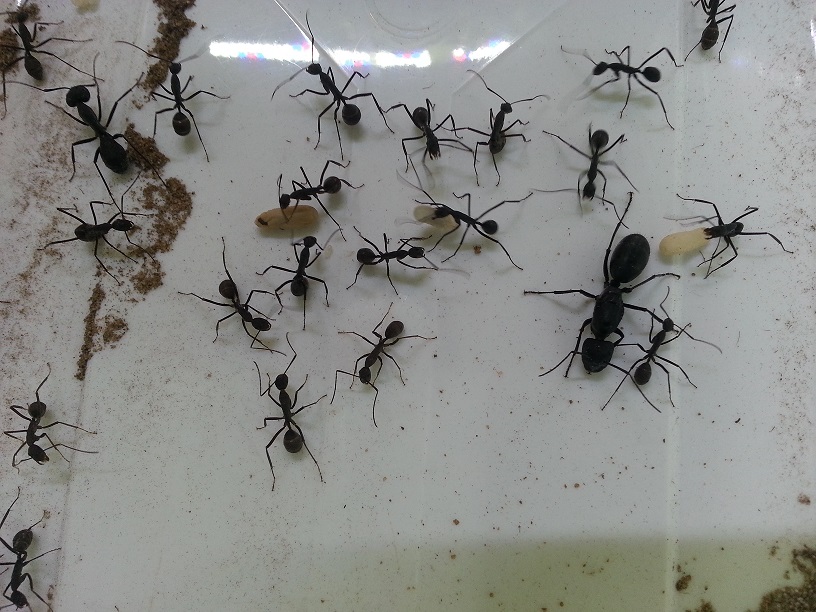
Camponotus sp.
- Taxonomie: Famille: Formicinae
- Origine: Afrique, Kenya
- Habitat: les steppes et les semi-déserts
- Couleur: Noir
- Taille : semblable à notre ligniperdus natif Camponotus , longues jambe
- Nourriture: miel / eau sucrée et les insectes
- Température: chaud à très chaud (24 à 34 °C)
- Sol: sol sablonneux rocheux
- La construction du nid : béton cellulaire , plâtre ou sol nids
- Plantation: végétation de steppe typique
- Faits saillants: coloration très frappant et une bonne vue , accrocheur longues jambes semblables aux mouvements des Cataglyphis de beannten
Attention: La livraison prend en hiver et hors d'Europe à vos propres risques !
Camponotus sp. a été ajouté à votre panier. Camponotus sp. ne peut être ajouté à votre panier.| Coloni
- Pas disponible en ce moment Avec 40-50 ouvrieres |

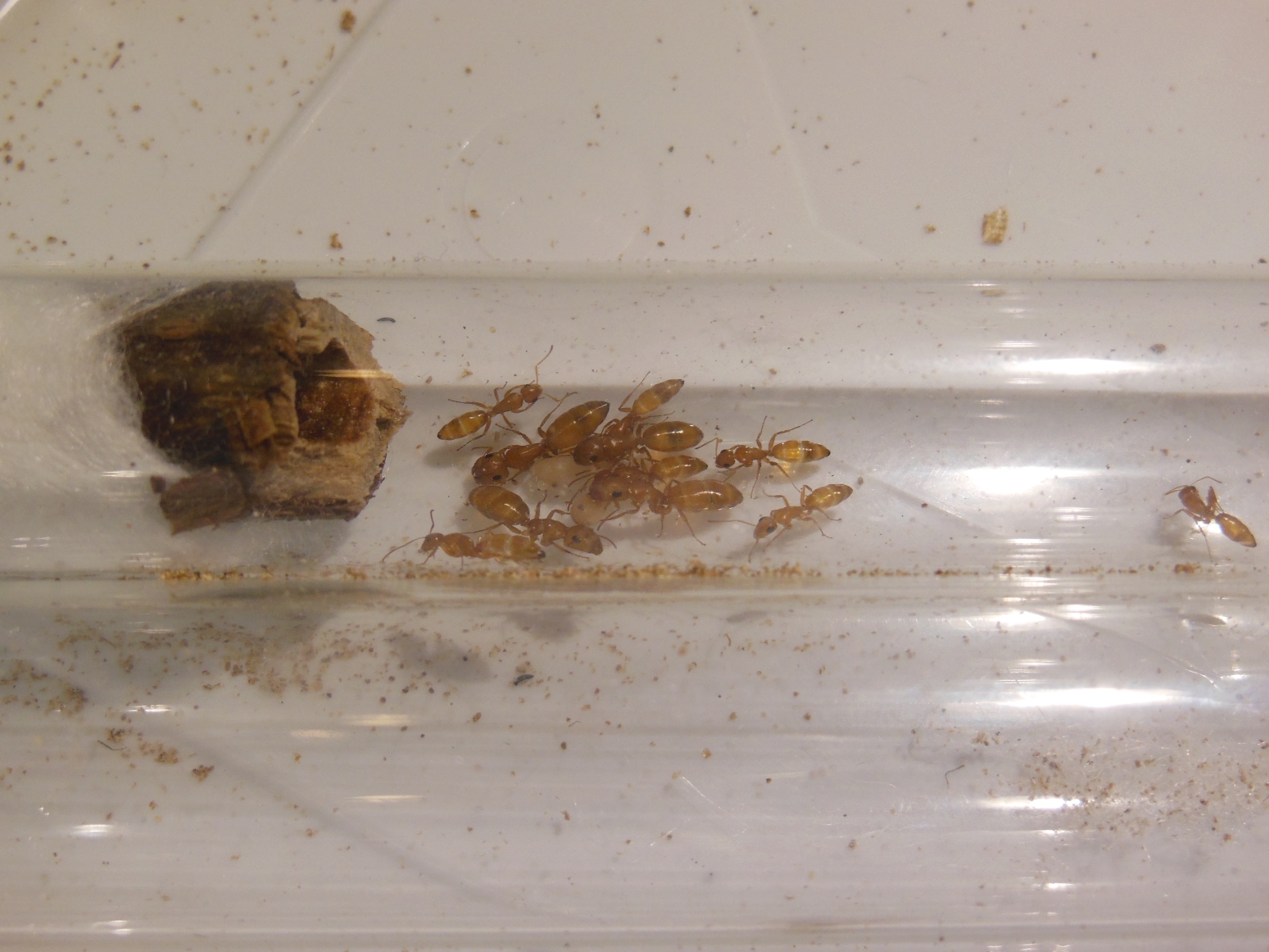

Camponotus sp. "Afrique"
An evolutionary curiosity: This Camponotus mimics the physique of Tetraponera species living in the same habitat. Not only the body, even the nests and the extraordinary sense of sight this Formicinaes corresponds to the Tetraponera. Just like the Pseudomyrmecinaes it is primarily visually oriented and nests in hollow branches.
- Taxonomy: Subfamily: Formicinae
- Distribution: Eastern Africa
- Habitat: Veld and semidesert
- Color: orange/yellow
- Nutrition: Honey-/sugarwater, insects, spiders, other small animals
- Temperature: warm to hot, 24 - 34 °C
- Nesting: hollow branchlets (elder, blackberry, buddleia)
- Planting: typical veld vegetation
- Specifics: polymorph, noticeable cloring, good visual orientation
Camponotus sp. "Afrique" a été ajouté à votre panier. Camponotus sp. "Afrique" ne peut être ajouté à votre panier.| Colonie
- Pas disponible en ce moment Avec 100 ouvrières |

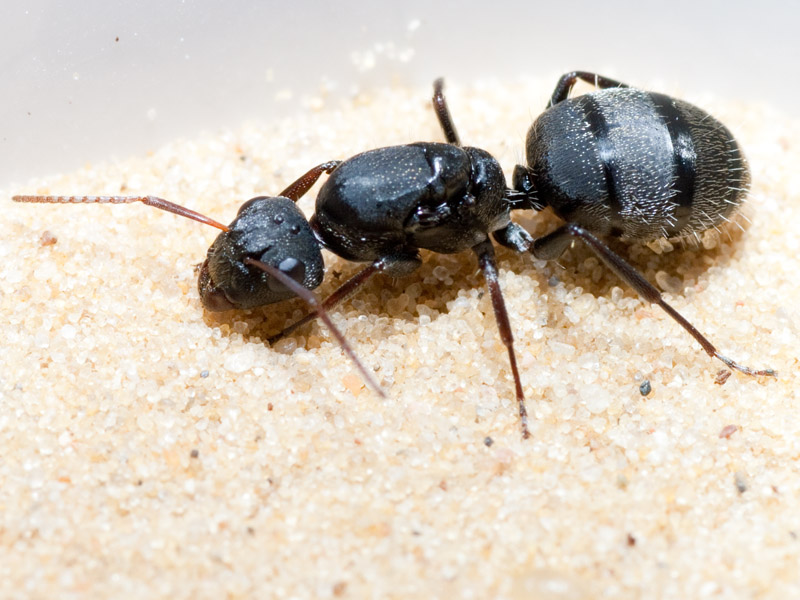
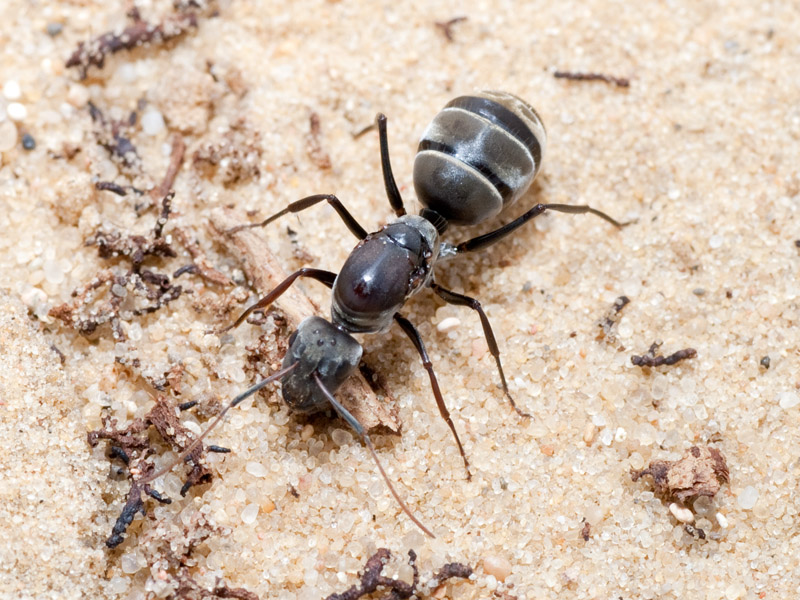


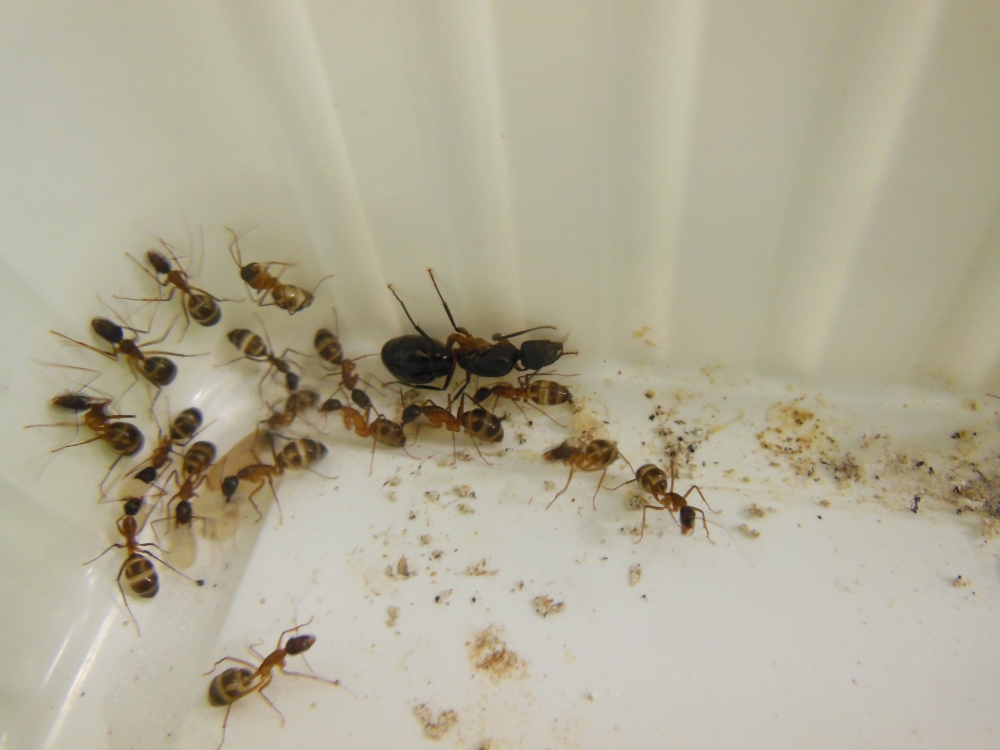
Camponotus sp. "Afrique"
Various Camponotus species of East Africa.
- Taxonomy: Subfamily Formicinae, Tribe Camponotini
- Size: Queen: 10 - 12 mm
- Distribution: East Africa
- Nutrition: Honey- or sugar water and insects
- Hibernation: No
- Temperature: 26 - 30 °C (very hot)
- Humidity: dry (veld)
Camponotus sp. "Afrique" a été ajouté à votre panier. Camponotus sp. "Afrique" ne peut être ajouté à votre panier.| Petite Colonie (Sp. 1)
- Pas disponible en ce moment Avec 150-200 ouvrières | |
| Colonie (Sp. 9)
- Pas disponible en ce moment Avec 100 ouvrières |

Camponotus spec.
Une très belle sp Camponotus. de l'Afrique. Cette fourmi est en contraste avec de nombreux autres Camponotus diurne et très agréable à regarder espèces. Elle vit dans les branches ou des brindilles creuses et a besoin d'un environnement très chaud et sec. Accès à l'eau potable, cependant, doit être assurée. La nourriture est assez facile avec du miel ou de l'eau de sucre et divers insectes.
La colonie proposée ici comprend environ 800 - 1200 travailleurs et est livré avec l'Korkästen photo. Dans la colonie maintenant aussi des animaux de sexe sont utilisés.
Taxonomie: Famille Formicinae, Tribe Camponotini
Taille: Queen: 10-12 mm, les travailleurs: 5 - -10mm
Couleur: noir mat
Gamme: Afrique de l'Est
Nourriture: miel ou d'eau sucrée et les insectes
Hibernation: Non
Température: 26 à 30 ° C (très chaud)
Humidité: sec (désert)
Habitat: branches creuses, brindilles
Camponotus spec. a été ajouté à votre panier. Camponotus spec. ne peut être ajouté à votre panier.| Grande colonie
- Pas disponible en ce moment Colonie avec 800-1200 ouvrieres |
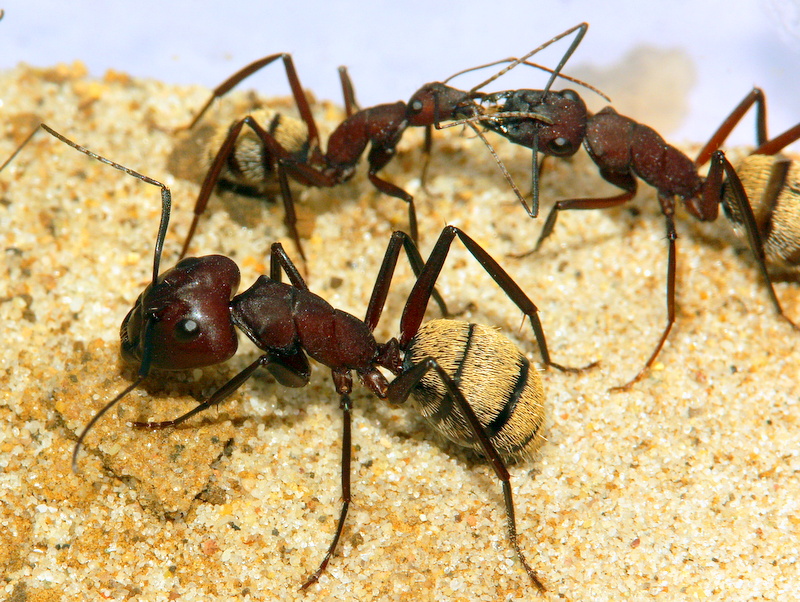


Camponotus storeatus
This is a beautifully coloured Camponotus species from the southern parts of Africa, which also stands out due to its exceptional behavior. This species lives in steppes and semi-deserts, which is why it's not difficult to keep in captivitiy. A noticeable characteristic is the good eyesight and its impressive size.
- Taxonomy: Subfamily: Formicinae
- Origin: South Africa
- Colour: dark red, gaster with dense cream-colored hairs, sometimes interrupted by median bare patches
- Size: Queen: about 17 - 18 mm / Minor: about 9 - 10 mm / Media: about 11 - 14 mm / Major: about 15 - 19 mm
- Dormant phase: in nature from June to end of August, temperatures up to +7 °C at night, up to 20 °C during the day
- Nutrition: honey/sugar water and insects
- Temperature: from warm to very hot: about 24 - 34 °C
- Soil conditions: sandy/rocky soil
- Nest building: porous concrete, plaster or soil nests
- Planting: typical plants of arid areas
- Specifics: very colourful and good eyesight
Attention: A specialized carrier for live animals should be used. Shipping abroad at your own risk!
Camponotus storeatus a été ajouté à votre panier. Camponotus storeatus ne peut être ajouté à votre panier.| Colonie
- Pas disponible en ce moment Avec 5 à 10 ouvrières |
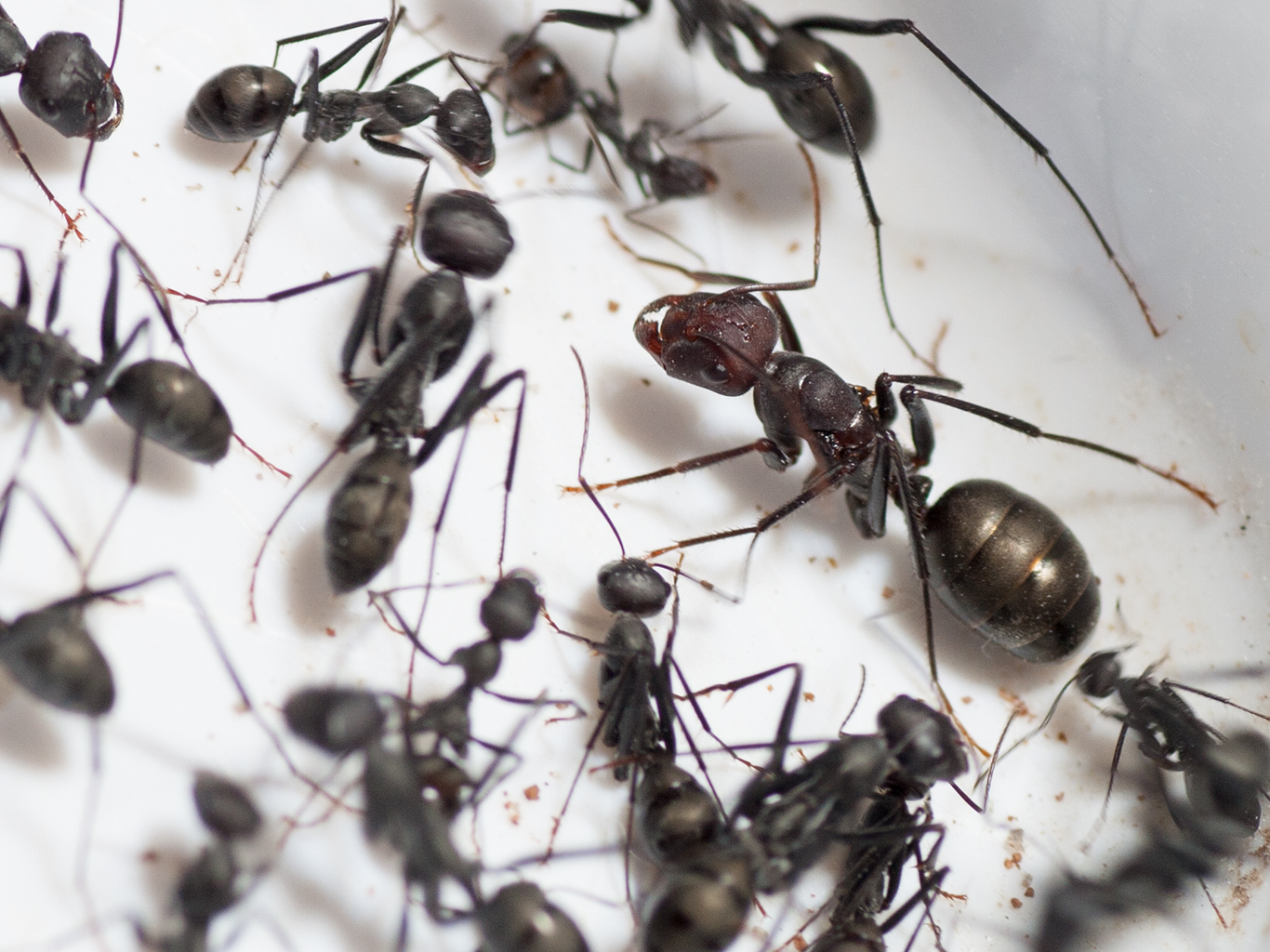

Cataglyphis sp.
The kinds of the type Cataglyphis are exclusively ground inhabitants. In adaptation to their way of life as a ground hunter they have nearly lost the ability to climb up at plain surfaces like panes of glass. They do this only under the greatest efforts and undertake such excursion only at food storage, at concerns or lack of space. As an inhabitant of subtropic areas this ant needs a rest, like the hibernation of local kinds. A cool down of the terrarium on 15 to 18 degrees for 1 to 2 months in the winter is enough to interrupt the brood activity and to give the colony time to regenerate. Also offer enough fodder in the form of carbohydrates now.
- Taxonomy: Subfamily Formicinae, Tribe Formicini
- Distribution: north africa
- Characteristics: very polymorph
- Appearence of the queen: head and thoraxand abdomen matt black, bottom side of the abdomen shiny black, very long legs
- Appearance of the workers: Head and thorax and abdomen matt black, bottom side of the abdomen shiny black, very long legs
- Size: Queen about 16 mm, Workers: 6 - 16 mm
- Breed-time: fast (4 - 6 weeks)
- Nest building: soil nests
- Nutrition: living insects self-hunted, also fresh-dead insects and other invertebrates, honey- and sugar water, always fresh water in a drank. (The kind is not excessively demanding, but needs, sufficient care and constant supplies of animal protein during the summer period)
- Temperature: warm (25 - 30 °C), in the deeper nest area there should be cooler areas.
- Air humidity: in the deeper nest area there should be areas with higher air humidity. besides dry, occasional spraying of the runout area with water.
- Number of basins: 1 basin is adequate, but with a base as lage as possible.
- Dimensions of basin: at least 40 x 30 x 30 cm (depending of colony-size), with a possibility to clean up the nest
- Soil conditions: sand, loam, stones. Design the fittings from steppes to dessert-like, some dry branches increase the runout surface.
- Planting: Plantation with mediterranean plants is advantageous. Hydrocultures with havy little stones are advisable, because for the big and strong ants it is impossible then to put on twig nests in the damp root area.
- Accessories: an infrared heating lamp for heating the nest. Terrarium lighting with clock timer.
- Keeping level: middle
Cataglyphis sp. a été ajouté à votre panier. Cataglyphis sp. ne peut être ajouté à votre panier.| Colonie
- Pas disponible en ce moment Avec 100-150 ouvrières | |
| Colonie
- Pas disponible en ce moment avec 200-230 ouvrières |
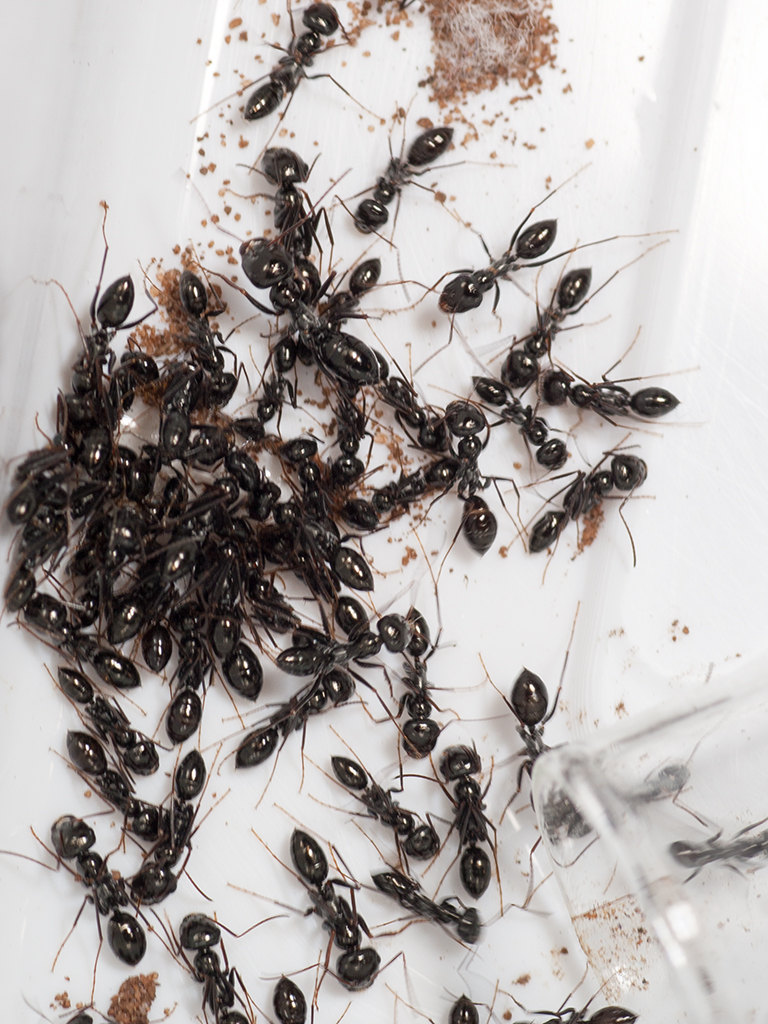

Cataglyphis sp. 1
Very fortified aggressive ant species with good sight. It is a long-legged and fast moving ant species. They almost can't climb glass panes.
- Taxonomy: Formicinae
- Color: black, shiny
- Characteristics: strong polymorph
- Size:4 - 8 mm
- Distribution: north africa
- Nutrition: Honey- or sugar water and insects
- Hibernation: Yes (slight)
- Temperature: 20 - 35 °C (summer, outside the nest)
- Nest building: Build their nest deep in soil, creates calderas
- Planting: steppe like
- Class: medium
Cataglyphis sp. 1 a été ajouté à votre panier. Cataglyphis sp. 1 ne peut être ajouté à votre panier.| Colonie
- Pas disponible en ce moment avec 10-20 ouvrières |

Cataglyphis sp. 2
Very fortified aggressive ant species with good sight. It is a long-legged and fast moving ant species. They almost can't climb glass panes.
- Taxonomy: Formicinae
- Color: red-black, shiny
- Characteristics: polymorph
- Size:4 - 8 mm
- Distribution: north africa, mountains
- Nutrition: Honey- or sugar water and insects
- Hibernation: Yes (slight)
- Temperature: 20 - 35 °C (summer, outside the nest)
- Nest building: Build their nest deep in soil, creates calderas
- Planting: steppe like
- Class: medium
Cataglyphis sp. 2 a été ajouté à votre panier. Cataglyphis sp. 2 ne peut être ajouté à votre panier.| Colonie
- Pas disponible en ce moment avec 70-100 ouvrières |


Cataglyphis sp. 3
Very fortified aggressive ant species with good sight. It is a long-legged and fast moving ant species. They almost can't climb glass panes.
- Taxonomy: Formicinae
- Color: red-black
- Characteristics: polymorph
- Size: 6 - 12mm
- Distribution: north africa
- Nutrition: Honey- or sugar water and insects
- Hibernation: Yes (slight)
- Temperature: 20 - 35 °C (summer, outside the nest)
- Nest building: Build their nest deep in soil, creates calderas
- Planting: steppe like
- Class: medium
Cataglyphis sp. 3 a été ajouté à votre panier. Cataglyphis sp. 3 ne peut être ajouté à votre panier.| Colonie
- Pas disponible en ce moment avec ca. 400 ouvrières | |
| Colonie
- Pas disponible en ce moment avec 100-150 ouvrières |

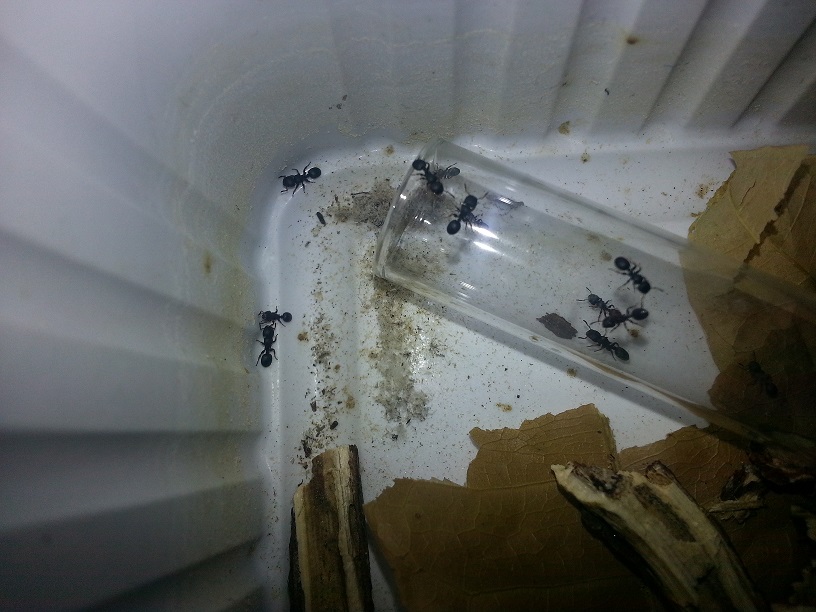
Cataulacus sp.
- Famille: Formicidae
- Sous-famille: Myrmicinae
- Genre: Cataulacus
- Origine: Afrique centrale
- Taille: 3-5 mm
- Couleur: noir
Ces fourmis vivent dans de fines branches creuses (par exemple, les branches de sureau). Sur un faible taux d'humidité doit être assurée. Les températures doivent être dues à l'origine des fourmis à 26-28 degrés. Recommandé ici est l'utilisation d'un radiateur de chaleur. Le régime alimentaire est assez facile avec du sucre ou de l'eau de miel et divers insectes. Le comportement et le mode de vie qu'il Cataulacus d'Afrique ressemblent à la Cephalotes de l'Asie. Un bel exemple d'évolution convergente.
Cataulacus sp. a été ajouté à votre panier. Cataulacus sp. ne peut être ajouté à votre panier.| Petite colonie
- Pas disponible en ce moment Avec 10-20 ouvrieres | |
| Colonie
- Pas disponible en ce moment Avec 40-50 ouvrieres |
RENDERING: 39 ms, LOADING: ? ms
No. article: caci0001