


Aphaenogaster sp.
- Taxonomy: Myrmicinae
- Color: black (greying), haired
- Distribution: Northafrica
- Nutrition: Honey- or sugar water and insects
- Hibernation: Yes
- Temperature: 20 - 28 °C
- Humidity: dry
- Nest building: Soil nests, also under stones
- Planting: nothing specific
- Class: easy
- Specifics: Haired ant with longish heads
 Aphaenogaster sp. e' stato aggiunto al carrello
 Aphaenogaster sp. non puo' essere aggiunto al carrello.
| Colonia
- Al momento non disponibile Contiene 30-50 operaie |
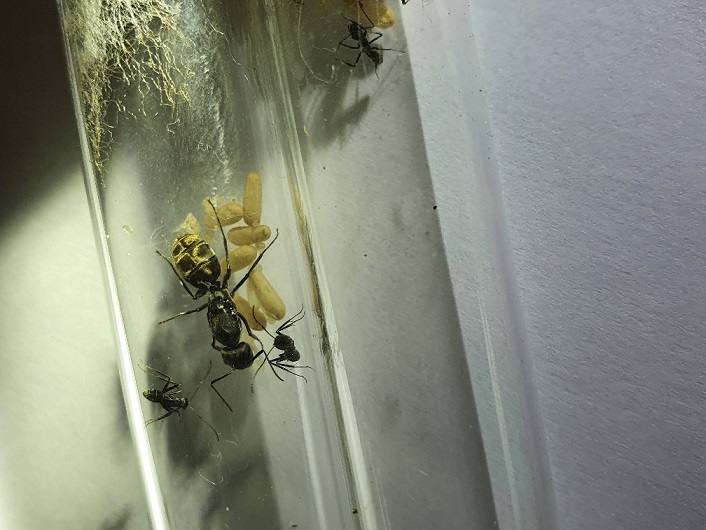
Camponotus cinctellus
A beautiful golden shiny Ant from Africa.
- Taxonomy: Subfamily Formicinae, Tribe Camponotini
- Size: Queen: 14 mm
- Distribution: East Africa
- Nutrition: Honey- or sugar water and insects
- Hibernation: No
- Temperature: 26 - 30 °C (very hot)
- Humidity: dry (veld)
Camponotus cinctellus e' stato aggiunto al carrello Camponotus cinctellus non puo' essere aggiunto al carrello.| Empty
- Al momento non disponibile with 20-30 worker |


Camponotus detritus
Error in product text, please contact the webmaster to fix this. Camponotus detritus e' stato aggiunto al carrello Camponotus detritus non puo' essere aggiunto al carrello.| Colonia
- 950,00 € - with 60-80 workers |

Camponotus fellah
This is a beautifully colored, vibrant ant species. Remarkable are apart from the color the elongated heads of the workers.
- Taxonomy: Subfamily Formicinae, Tribe Camponotini
- Distribution: Middle east, Northern Africa
- Nutrition: Honey- or sugar water and insects
- Hibernation: No
- Climate: tropical
- Nest building: Soil nests, between stones
- Planting: nothing specific
- Level: easy
Camponotus fellah e' stato aggiunto al carrello Camponotus fellah non puo' essere aggiunto al carrello.| Colonia piccola
- Al momento non disponibile Con 1-3 operaie | |
| Colonia
- Al momento non disponibile Con circa 30 operaie |

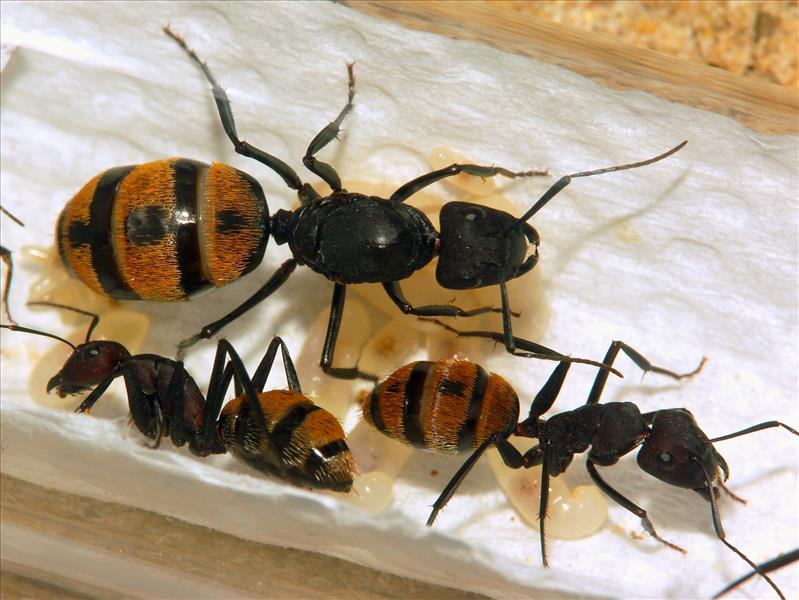

Camponotus fulvopilosus
This is a beautifully colored Camponotus species from southern Africa, which also stands out due to its exceptional behavior. This species lives in steppes and semi-deserts, which is why it's not difficult to keep in captivitiy. A noticeable characteristic is the good eyesight and its impressive size.
- Taxonomy: Subfamily: Formicinae
- Origin: Angola, Namibia, Botswana, South Africa
- Color: black, gaster with dense orange hairs, sometimes interrupted by median bare patches
- Size: Queen: about 17 - 18 mm / Minor: about 9 - 10 mm / Media: about 11 - 14 mm / Major: about 15 - 19 mm
- Dormant phase: in nature from June to end of August, temperatures up to +7 °C at night, up to 20 °C during the day
- Nutrition: honey/sugar water and insects
- Temperature: from warm to very hot: about 24 - 34 °C
- Soil conditions: sandy/rocky soil
- Nest building: porous concrete, plaster or soil nests
- Planting: typical plants of arid areas
- Specifics: very colourful and good eyesight
Camponotus fulvopilosus e' stato aggiunto al carrello Camponotus fulvopilosus non puo' essere aggiunto al carrello.| Colonia
- Al momento non disponibile Con ca.50-100 operaie | |
| Colonia grande
- Al momento non disponibile Con 1500 operaie |


Camponotus maculatus
- Taxonomy: Subfamily Formicinae, Tribe Camponotini
- Distribution: Central Africa
- Color: small ants are yellow till brown, majors are marmorate
- Nutrition: Honey- or sugar water and insects
- Hibernation: No
- Climate: tropical (moist)
- Nest building: Soil nests, between stones
- Planting: nothing specific
- Level: easy
- Specifics: Builds "half" calderas (one sided)
Camponotus maculatus e' stato aggiunto al carrello Camponotus maculatus non puo' essere aggiunto al carrello.| Colonia piccola
- Al momento non disponibile Con circa 5-10 operaie |
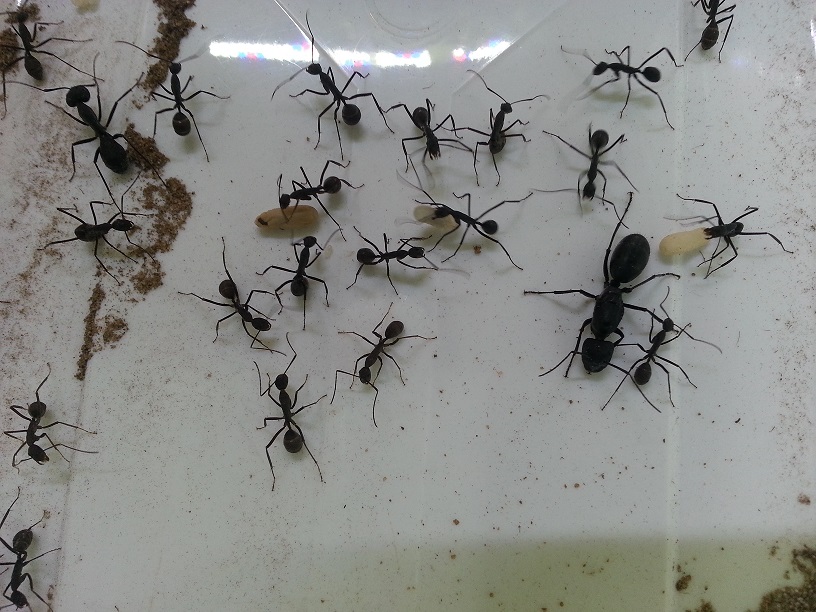
Camponotus sp.
- Tassonomia: Famiglia : Formicinae
- Origine: Africa , Kenia
- Habitat: steppe e semi -deserti
- Colore: Nero
- Dimensioni: simile al nostro nativo Camponotus ligniperdus , gambe lunghe
- Cibo: miele acqua / zucchero e insetti
- Temperatura: caldo al caldo (24 - 34 °C)
- Terreno: terreno sabbioso - roccioso
- La costruzione del nido: cemento cellulare , gesso o suolo nidi
- Piantare: tipica vegetazione steppa
- Highlights: colorazione molto suggestiva e una buona vista , accattivante leggy simile ai movimenti dei Cataglyphis beannten
Attenzione : La consegna avviene in inverno e al di fuori dell'Europa a vostro rischio e pericolo !
Camponotus sp. e' stato aggiunto al carrello Camponotus sp. non puo' essere aggiunto al carrello.| Colonia
- Al momento non disponibile Con 40-50 operaie |

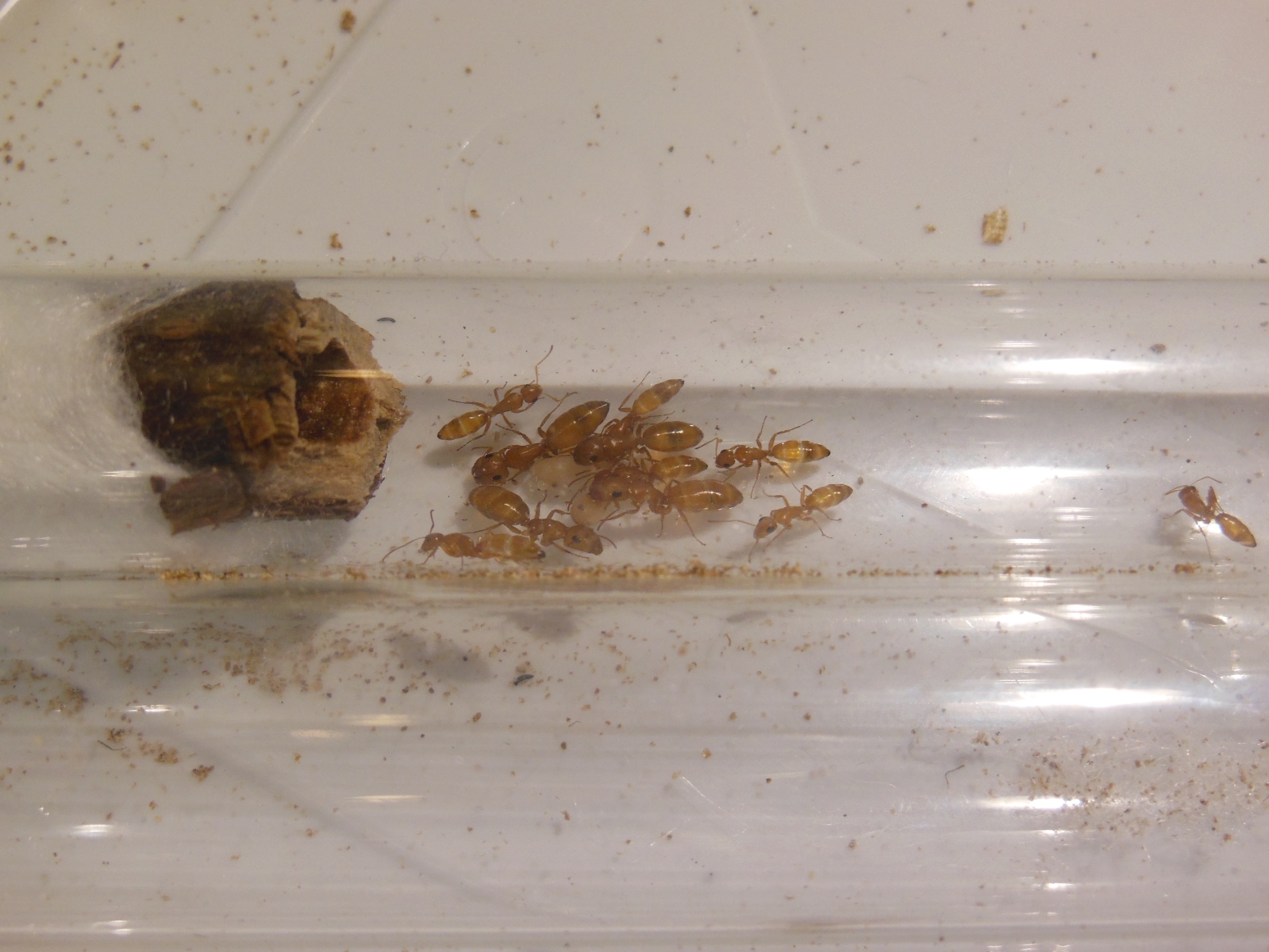

Camponotus sp. "Africa"
An evolutionary curiosity: This Camponotus mimics the physique of Tetraponera species living in the same habitat. Not only the body, even the nests and the extraordinary sense of sight this Formicinaes corresponds to the Tetraponera. Just like the Pseudomyrmecinaes it is primarily visually oriented and nests in hollow branches.
- Taxonomy: Subfamily: Formicinae
- Distribution: Eastern Africa
- Habitat: Veld and semidesert
- Color: orange/yellow
- Nutrition: Honey-/sugarwater, insects, spiders, other small animals
- Temperature: warm to hot, 24 - 34 °C
- Nesting: hollow branchlets (elder, blackberry, buddleia)
- Planting: typical veld vegetation
- Specifics: polymorph, noticeable cloring, good visual orientation
Camponotus sp. "Africa" e' stato aggiunto al carrello Camponotus sp. "Africa" non puo' essere aggiunto al carrello.| Colonia
- Al momento non disponibile Con 100 operaie |

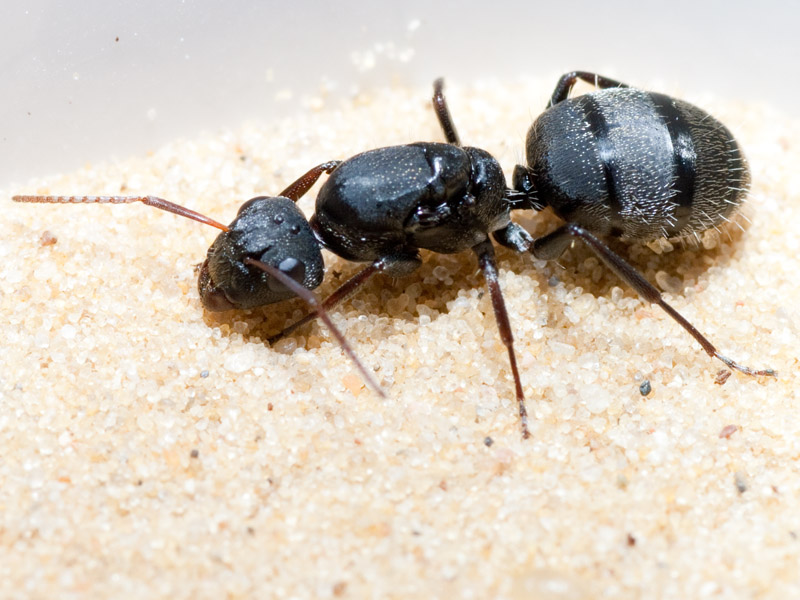
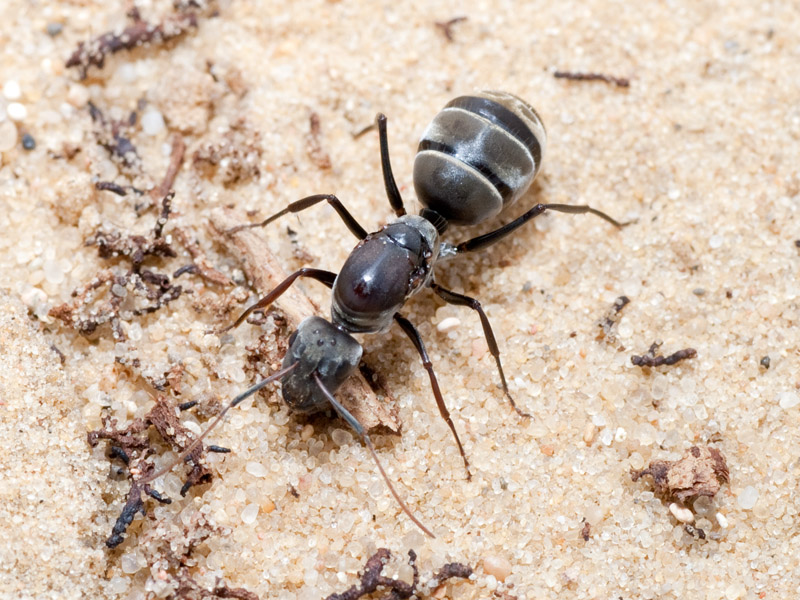


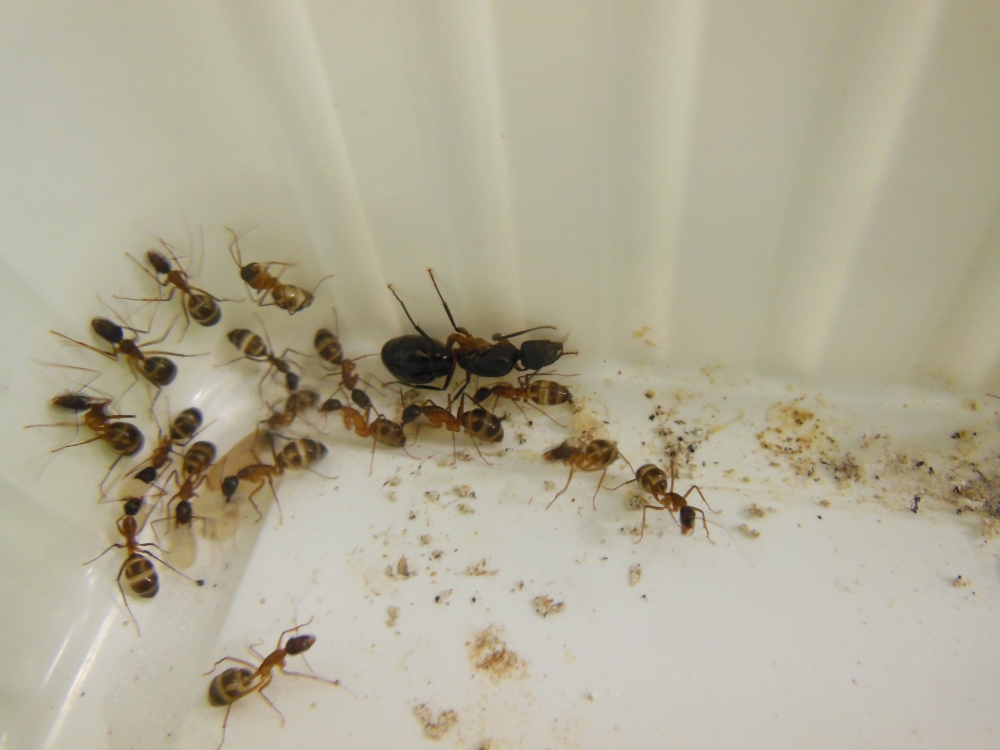
Camponotus sp. "Africa"
Various Camponotus species of East Africa.
- Taxonomy: Subfamily Formicinae, Tribe Camponotini
- Size: Queen: 10 - 12 mm
- Distribution: East Africa
- Nutrition: Honey- or sugar water and insects
- Hibernation: No
- Temperature: 26 - 30 °C (very hot)
- Humidity: dry (veld)
Camponotus sp. "Africa" e' stato aggiunto al carrello Camponotus sp. "Africa" non puo' essere aggiunto al carrello.| Colonia piccola (Sp. 1)
- Al momento non disponibile Con 150-200 operaie | |
| Colonia (Sp. 9)
- Al momento non disponibile Con 100 operaie |

Camponotus spec.
Un bel sp Camponotus. dall'Africa. Questa formica è in contrasto con molti altri Camponotus diurna e molto bello da guardare specie. Vive in rami cavi o ramoscelli e ha bisogno di un ambiente molto caldo e secco. L'accesso all'acqua potabile, tuttavia, deve essere garantita. Il cibo è abbastanza facile con miele o acqua e zucchero e vari insetti.
La colonia qui offerta comprende circa 800 - 1200 lavoratori e viene fornito con il Korkästen nella foto. Nella colonia ora anche gli animali vengono utilizzati sesso.
Tassonomia: Famiglia Formicinae, Tribe Camponotini
Dimensioni: Regina 10 - 12 mm, gli operai: 5 - -10mm
Colore: nero opaco
Range: Africa orientale
Cibo: miele o acqua e zucchero e insetti
Ibernazione: No
Temperatura: 26 - 30 ° C (molto caldo)
Umidità: secco (deserto)
Habitat: rami cave, ramoscelli
Camponotus spec. e' stato aggiunto al carrello Camponotus spec. non puo' essere aggiunto al carrello.| Grande colonia
- Al momento non disponibile Colonie con 800-1200 operaie |
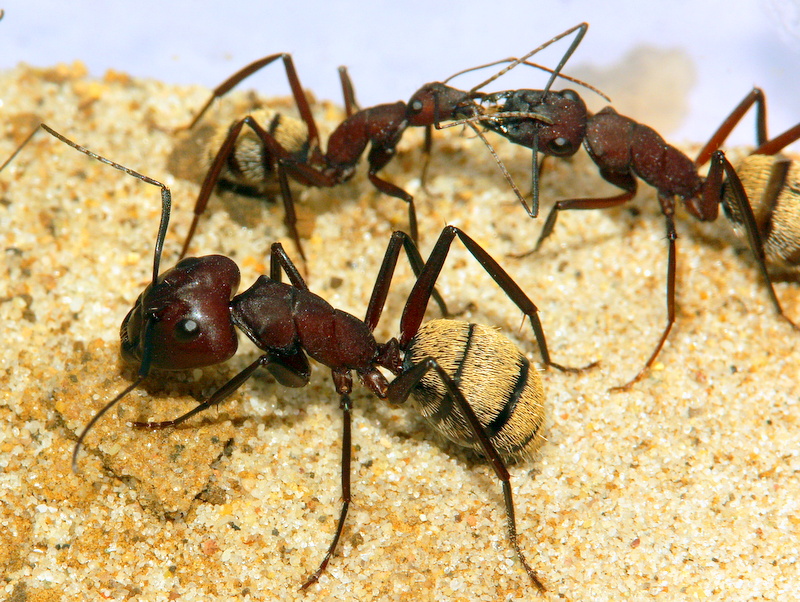


Camponotus storeatus
This is a beautifully coloured Camponotus species from the southern parts of Africa, which also stands out due to its exceptional behavior. This species lives in steppes and semi-deserts, which is why it's not difficult to keep in captivitiy. A noticeable characteristic is the good eyesight and its impressive size.
- Taxonomy: Subfamily: Formicinae
- Origin: South Africa
- Colour: dark red, gaster with dense cream-colored hairs, sometimes interrupted by median bare patches
- Size: Queen: about 17 - 18 mm / Minor: about 9 - 10 mm / Media: about 11 - 14 mm / Major: about 15 - 19 mm
- Dormant phase: in nature from June to end of August, temperatures up to +7 °C at night, up to 20 °C during the day
- Nutrition: honey/sugar water and insects
- Temperature: from warm to very hot: about 24 - 34 °C
- Soil conditions: sandy/rocky soil
- Nest building: porous concrete, plaster or soil nests
- Planting: typical plants of arid areas
- Specifics: very colourful and good eyesight
Attention: A specialized carrier for live animals should be used. Shipping abroad at your own risk!
Camponotus storeatus e' stato aggiunto al carrello Camponotus storeatus non puo' essere aggiunto al carrello.| Colonia
- Al momento non disponibile Con 5 a 10 operaie |
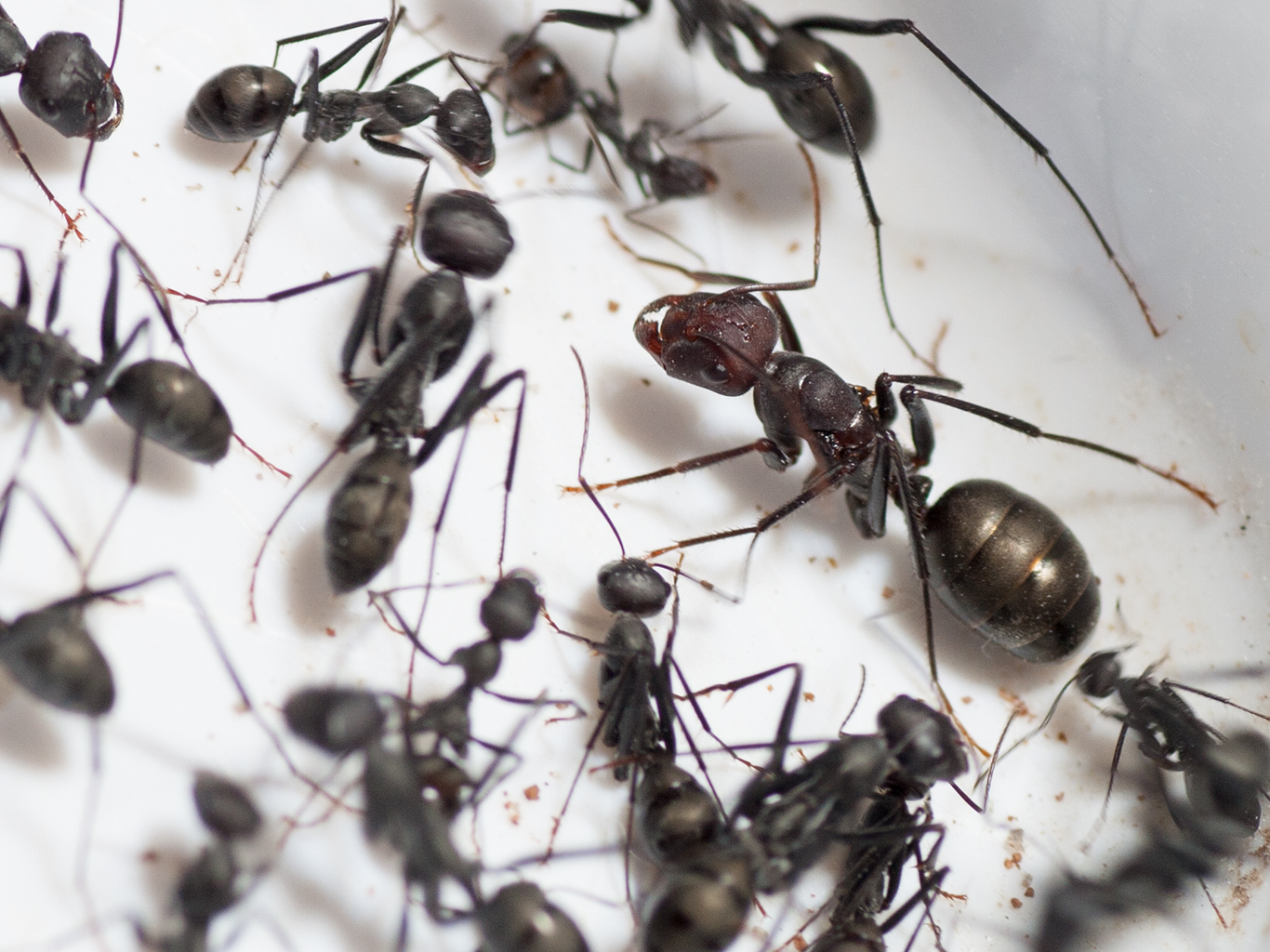

Cataglyphis sp.
The kinds of the type Cataglyphis are exclusively ground inhabitants. In adaptation to their way of life as a ground hunter they have nearly lost the ability to climb up at plain surfaces like panes of glass. They do this only under the greatest efforts and undertake such excursion only at food storage, at concerns or lack of space. As an inhabitant of subtropic areas this ant needs a rest, like the hibernation of local kinds. A cool down of the terrarium on 15 to 18 degrees for 1 to 2 months in the winter is enough to interrupt the brood activity and to give the colony time to regenerate. Also offer enough fodder in the form of carbohydrates now.
- Taxonomy: Subfamily Formicinae, Tribe Formicini
- Distribution: north africa
- Characteristics: very polymorph
- Appearence of the queen: head and thoraxand abdomen matt black, bottom side of the abdomen shiny black, very long legs
- Appearance of the workers: Head and thorax and abdomen matt black, bottom side of the abdomen shiny black, very long legs
- Size: Queen about 16 mm, Workers: 6 - 16 mm
- Breed-time: fast (4 - 6 weeks)
- Nest building: soil nests
- Nutrition: living insects self-hunted, also fresh-dead insects and other invertebrates, honey- and sugar water, always fresh water in a drank. (The kind is not excessively demanding, but needs, sufficient care and constant supplies of animal protein during the summer period)
- Temperature: warm (25 - 30 °C), in the deeper nest area there should be cooler areas.
- Air humidity: in the deeper nest area there should be areas with higher air humidity. besides dry, occasional spraying of the runout area with water.
- Number of basins: 1 basin is adequate, but with a base as lage as possible.
- Dimensions of basin: at least 40 x 30 x 30 cm (depending of colony-size), with a possibility to clean up the nest
- Soil conditions: sand, loam, stones. Design the fittings from steppes to dessert-like, some dry branches increase the runout surface.
- Planting: Plantation with mediterranean plants is advantageous. Hydrocultures with havy little stones are advisable, because for the big and strong ants it is impossible then to put on twig nests in the damp root area.
- Accessories: an infrared heating lamp for heating the nest. Terrarium lighting with clock timer.
- Keeping level: middle
Cataglyphis sp. e' stato aggiunto al carrello Cataglyphis sp. non puo' essere aggiunto al carrello.| Colonia
- Al momento non disponibile Con 100-150 operaie | |
| Colonia
- Al momento non disponibile can 200-230 operaie |
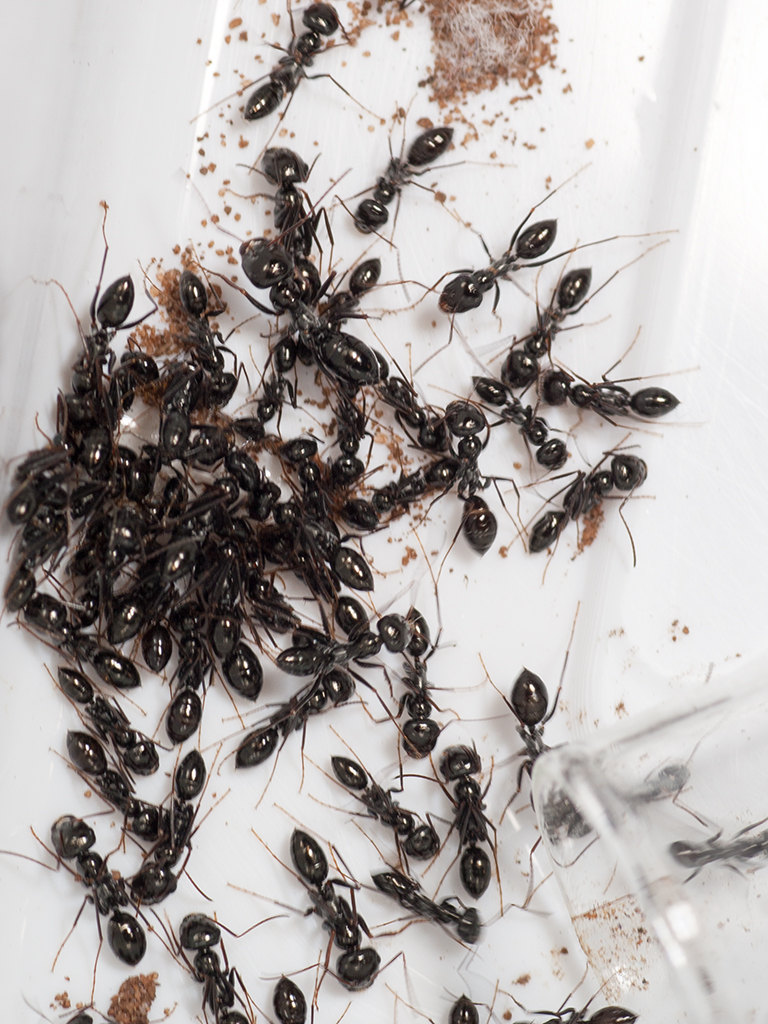

Cataglyphis sp. 1
Very fortified aggressive ant species with good sight. It is a long-legged and fast moving ant species. They almost can't climb glass panes.
- Taxonomy: Formicinae
- Color: black, shiny
- Characteristics: strong polymorph
- Size:4 - 8 mm
- Distribution: north africa
- Nutrition: Honey- or sugar water and insects
- Hibernation: Yes (slight)
- Temperature: 20 - 35 °C (summer, outside the nest)
- Nest building: Build their nest deep in soil, creates calderas
- Planting: steppe like
- Class: medium
Cataglyphis sp. 1 e' stato aggiunto al carrello Cataglyphis sp. 1 non puo' essere aggiunto al carrello.| Colonia
- Al momento non disponibile con 10-20 operaie |

Cataglyphis sp. 2
Very fortified aggressive ant species with good sight. It is a long-legged and fast moving ant species. They almost can't climb glass panes.
- Taxonomy: Formicinae
- Color: red-black, shiny
- Characteristics: polymorph
- Size:4 - 8 mm
- Distribution: north africa, mountains
- Nutrition: Honey- or sugar water and insects
- Hibernation: Yes (slight)
- Temperature: 20 - 35 °C (summer, outside the nest)
- Nest building: Build their nest deep in soil, creates calderas
- Planting: steppe like
- Class: medium
Cataglyphis sp. 2 e' stato aggiunto al carrello Cataglyphis sp. 2 non puo' essere aggiunto al carrello.| Colonia
- Al momento non disponibile con 70-100 operaie |


Cataglyphis sp. 3
Very fortified aggressive ant species with good sight. It is a long-legged and fast moving ant species. They almost can't climb glass panes.
- Taxonomy: Formicinae
- Color: red-black
- Characteristics: polymorph
- Size: 6 - 12mm
- Distribution: north africa
- Nutrition: Honey- or sugar water and insects
- Hibernation: Yes (slight)
- Temperature: 20 - 35 °C (summer, outside the nest)
- Nest building: Build their nest deep in soil, creates calderas
- Planting: steppe like
- Class: medium
Cataglyphis sp. 3 e' stato aggiunto al carrello Cataglyphis sp. 3 non puo' essere aggiunto al carrello.| Colonia
- Al momento non disponibile con ca. 400 operaie | |
| Colonia
- Al momento non disponibile con 100-150 operaie |

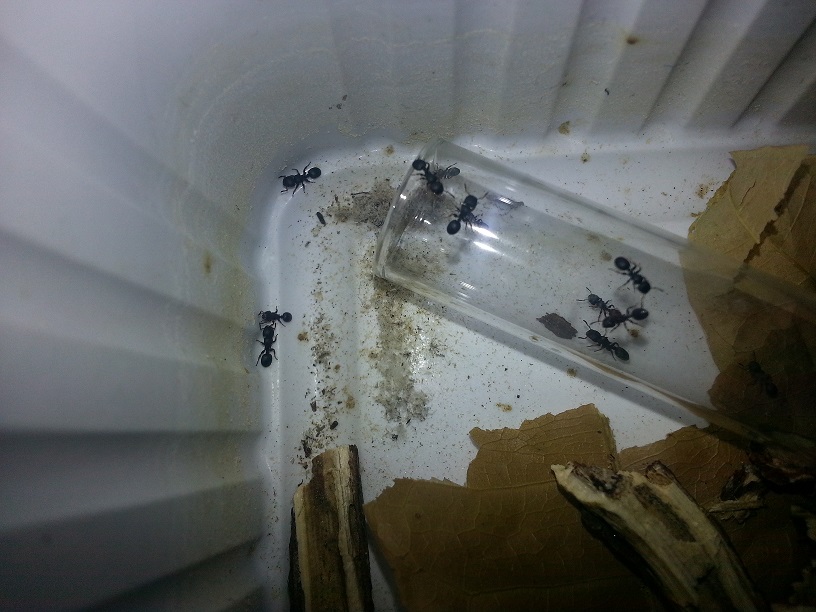
Cataulacus sp.
- Famiglia: Formicidae
- Sottofamiglia: Myrmicinae
- Genere: Cataulacus
- Origine: Africa centrale
- Dimensioni: 3-5 mm
- Colore: nero
Queste formiche vivono in rami sottili cavi (ad esempio rami di sambuco). Su un basso tasso di umidità deve essere garantita. Le temperature dovrebbero essere dovuta all'origine di formiche a 26-28 gradi. Positiva qui è l'uso di un radiatore termico. La dieta è abbastanza facile con zucchero o acqua di miele e insetti vari. Il comportamento e il modo di vita che Cataulacus dall'Africa assomigliano cephalotes dall'Asia. Uno splendido esempio di evoluzione convergente.
Cataulacus sp. e' stato aggiunto al carrello Cataulacus sp. non puo' essere aggiunto al carrello.| Colonia piccolo
- Al momento non disponibile Con 10-20 operaie | |
| Colonia
- Al momento non disponibile Con 40-50 operaie |

Messor arenarius
A matt black colored Messor species from the middle east and northern Africa. This species don't requires hibernation and can be kept warm or at room temperatur in winter. Messsor arenarius is a slim gracile and large Messor species that similar like other Messor produces so called ants bread. This species feeds not only exclusively of seeds, but also by other small animals.
- Taxonomy: Subfamily Myrmicinae, Tribe Pheidolini
- Color: black
- Size: Worker: 5-18 mm, Queen: 20 mm
- Distribution: Middle East, Northern Africa
- Characteristics: polymorph, monogyne
- Nest building: Soil nests, often under stones
- Nutrition: Mostly seeds from different rampant plants (also grass), but insects and honeywater too
- Temperature: 24- 28°C
- Hibernation: No
- Air humidity: dry
- Planting: nothing specific
All of our Messor will be shipped with a small container of hand-picked plant seeds that are most popular for the Messor.
Messor arenarius e' stato aggiunto al carrello Messor arenarius non puo' essere aggiunto al carrello.| Colonia
- Al momento non disponibile Con 2-5 operaie |


Messor cephalotes
Largest Messor species in the world with huge majors - it is highly polymorphic. The young animals of these ants have a bright red color. This species does not require hibernation and can be kept warm.
- Taxonomy: Subfamily Myrmicinae, Tribe Pheidolini
- Color: copper red
- Distribution: Central and East Africa
- Characteristics: polymorph, monogyne
- Nest building: Large soil nests
- Nutrition: Mostly seeds from different rampant plants (also grass), but insects and honeywater too
- Temperature: 24- 28°C
- Hibernation: No
- Air humidity: dry
- Planting: nothing specific
All of our Messor will be shipped with a small container of hand-picked plant seeds that are most popular for the Messor.
Messor cephalotes e' stato aggiunto al carrello Messor cephalotes non puo' essere aggiunto al carrello.| Colonia
- Al momento non disponibile Con circa 20-40 operaie |

Messor cf. ebeninus
A black colored messor species that can be found in Middle East and North Africa. For that reason this species don't require an extensive hibernation phase and so can be kept warm or at room temperatur in winter.
- Taxonomy: Subfamily Myrmicinae, Tribe Pheidolini
- Color: black
- Size: Worker: 4-11 mm, Queen: 12-13 mm
- Distribution: Middle East, Northern Africa
- Characteristics: polymorph, monogyne
- Nest building: Soil nests, often under stones
- Nutrition: Mostly seeds from different rampant plants (also grass), but insects and honeywater too
- Temperature: 16- 25°C (Mediterranean)
- Hibernation: No
- Air humidity: dry
- Planting: nothing specific
All of our Messor will be shipped with a small container of hand-picked plant seeds that are most popular for the Messor.
Messor cf. ebeninus e' stato aggiunto al carrello Messor cf. ebeninus non puo' essere aggiunto al carrello.| Colonia piccola
- Al momento non disponibile Con fino a 30 operaie | |
| Colonia
- Al momento non disponibile Con 50 operaie |
Messor cf. minor (Northafrica )
Beautiful brown-black colored messor species which is also known as Messor minor hesperius.This species can be found in low lands and also in mountains and don't requires hibernation phase.
- Taxonomy: Subfamily Myrmicinae, Tribe Pheidolini
- Color: Workers: brown with black abdomen, Queen: black
- Size: Worker: 4-11mm, Queen: 12-13mm
- Distribution: Northafrica
- Characteristics: polymorph
- Nest building: Soil nests, often under stones
- Nutrition: Mostly seeds from different rampant plants (also grass), but insects and honeywater too
- Temperature: 22 - 35 °C
- Hibernation: No
- Planting: nothing specific
Messor cf. minor (Northafrica ) e' stato aggiunto al carrello Messor cf. minor (Northafrica ) non puo' essere aggiunto al carrello.| Colonia
- Al momento non disponibile con circa 150 operaie |

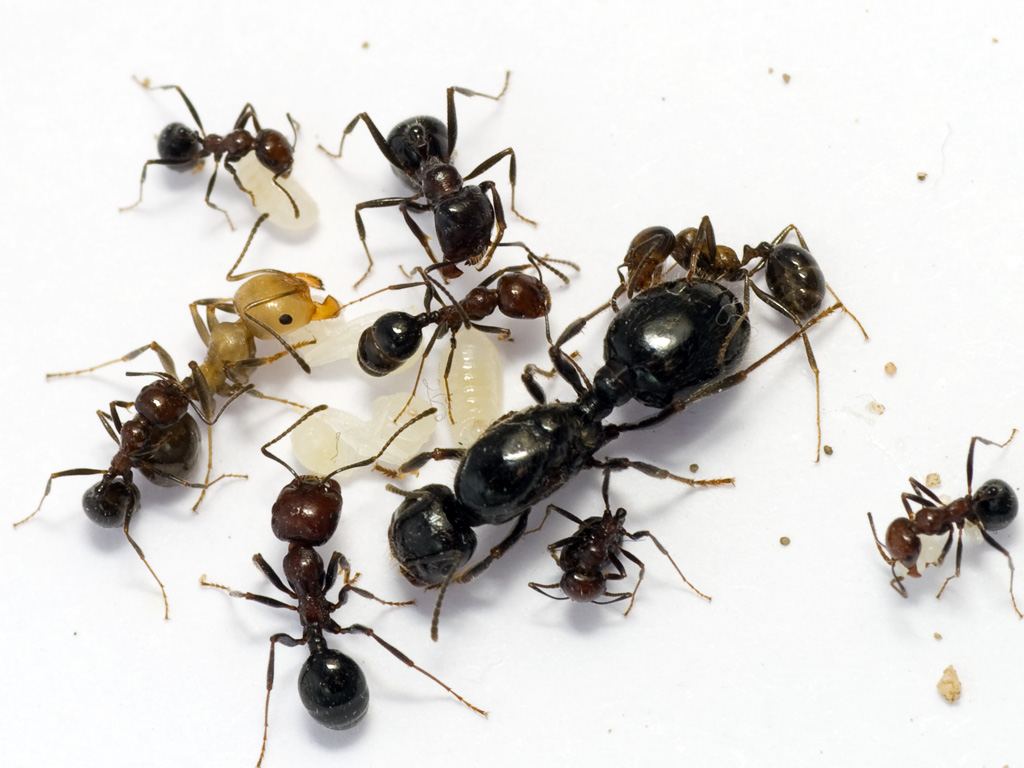
Messor minor hesperius
Beautiful brown-black colored messor species which is also known as Messor minor hesperius.This species can be found in low lands and also in mountains and don't requires hibernation phase.
- Taxonomy: Subfamily Myrmicinae, Tribe Pheidolini
- Color: Workers: brown with black abdomen, Queen: black
- Size: Worker: 4-11mm, Queen: 12-13mm
- Distribution: Macronesia
- Characteristics: polymorph
- Nest building: Soil nests, often under stones
- Nutrition: Mostly seeds from different rampant plants (also grass), but insects and honeywater too
- Temperature: 22 - 30 °C (Mediterranean)
- Hibernation: No
- Air humidity: 50-65% (mountains)
- Planting: nothing specific
Messor minor hesperius e' stato aggiunto al carrello Messor minor hesperius non puo' essere aggiunto al carrello.| Colonia piccola
- Al momento non disponibile Regina con 10-20 operaie | |
| Colonia
- Al momento non disponibile Con 30-50 operaie | |
| Colonia grande
- Al momento non disponibile Con 100 operaie |

Messor sp. (Central Africa)
Central African Messor species with extra ordinary red colored heads. This species doesn't need hibernation. They subsist on seeds, honey-/sugar water but also insects (similar to many Pheidole species). They will often nests in sand or loamy sand.
- Taxonomy: Myrmicinae
- Color: shinny black, red heads
- Distribution: Central Africa
- Nutrition: Mostly seeds from different rampant plants (also grass), but insects and honeywater too
- Temperature: 25 - 35 °C
- Hibernation: No
- Air humidity: Dry climate

- Nest building: Soil nests, loam, pebbles
- Planting: nothing specific
- Class: easy to keep
All Messor will be included with untreated hand-picked plant seeds.
Messor sp. (Central Africa) e' stato aggiunto al carrello Messor sp. (Central Africa) non puo' essere aggiunto al carrello.| Colonia
- Al momento non disponibile Con 100 operaie |

Messor sp. (Nordafrika)
Nothern African Messor species This species doesn't need hibernation. They subsist on seeds, honey-/sugar water but also insects (similar to many Pheidole species). They often nests in sand or loamy sand.
- Taxonomy: Myrmicinae
- Color: black brown
- Distribution: Nothern Africa
- Nutrition: Mostly seeds from different rampant plants (also grass), but insects and honeywater too
- Temperature: 25 - 35 °C
- Hibernation: No
- Air humidity: Dry climate
- Nest building: Soil nests, loam, pebbles
- Planting: nothing specific
- Class: easy to keep
All Messor will be included with untreated hand-picked plant seeds.
Messor sp. (Nordafrika) e' stato aggiunto al carrello Messor sp. (Nordafrika) non puo' essere aggiunto al carrello.| Colonia piccola
- Al momento non disponibile Con circa 20 - 30 operaie | |
| Colonia
- Al momento non disponibile Con 50 operaie |

Myrmicaria sp. "Africa"
A dominant Myrmicaria species from East Africa which builds large nests. This species builds dense streets with ants like Atta in the new world. They build crateriform nests often arround tree trunks.
- Taxonomy: Subfamily Myrmicinae, Tribe Myrmicariini
- Origin: East Africa
- Characteristics: Monomorph, can not sting
- Hibernation: No
- Nest bulding: soil nests, near tree trunks
- Nutrition: honeywater, insects
- Temperature: 26 - 30°C
- Air humidity: dry (veld)
- These ants have many features that wants a holder :
- They are diurnal
- go actively hunt prey
- run on roads
- can very well hold in a nest ytong
- there is always something to watch
Myrmicaria sp. "Africa" e' stato aggiunto al carrello Myrmicaria sp. "Africa" non puo' essere aggiunto al carrello.| Colonia
- Al momento non disponibile Con 50-100 operaie | |
| Colonia
- Al momento non disponibile Con circa 800-1000 operaie |
Ocymyrmex sp.
This is a very interesting ant species from southern Africa, which especially stands out due to its exceptional speed when furaging in arid and hot areas. Commonly often called "Hotrod Ant", this ants' genera name also indicates how fast they forage on sandy grounds, primarily preying upon heat-stressed insects. Hence the meaning of Ocymyrmex is simply, fast ant. Another noticeable characteristic is the ability to consume even large prey items in no time.
- Taxonomy: Subfamily: Myrmicinae, Tribe: Pheidolini
- Origin: Botswana and South Africa
- Color:red brown
- Size: Queen: about 7 - 9 mm (ergatoid) / Workers: about 7 - 8 mm
- Dormant phase: In nature from June to end of August; temperatures within this period up to +7 °C at night, up to 20 °C during the day
- Nutrition: Honey/sugar water and dead insects
- Temperature: From warm to very hot: about 24 - 34 °C
- Soil conditions: sandy/rocky soil
- Nest building: Porous concrete, plaster or soil nests
- Planting: Typical plants of arid areas
- Specifics: very fast moving, ergatoid queens
Additional Information: The colonies offered have been kept for about five months and large amounts of brood in all stages have always been present. All colonies developed nicely and showed to be rather easy to keep in captivity. Of course colonies of the offered size also produce males in varying numbers. Obviously each colony contains quite a number of ergatoid queens, but it is unfortunately not possible to determine, how many are actually taking part in the reproduction process.
Attention: Shipping abroad at your own risk!
Ocymyrmex sp. e' stato aggiunto al carrello Ocymyrmex sp. non puo' essere aggiunto al carrello.| Colonia
- Al momento non disponibile Con ca. 100 - 150 operaie e numero indefinito di regine |

Oecophylla longinoda
Questa formica vive in natura in alto sugli alberi , dove costruiscono il loro nido o più nidi . Non vivere nel terreno e non può cadere delle foglie . Essi formano lunghe catene del proprio corpo , in modo che insieme trovano la forza di mettere insieme le foglie . In questa posizione , le lame vengono mantenuti fino altro gruppo di lavoratori che sono stati tessuti insieme . Per prendere le larve di cura tra le mandibole , che emettono una secrezione . Si muovono le larve dolcemente tra i margini fogliari avanti e indietro . Questo crea le "tessere nidi " tra le foglie .
Origine: Africa
Tassonomia : Formicinae Famiglia , Tribù Oecophyllini
Caratteristiche: minori - grandi lavoratori
Ibernazione : No
Aspetto della regina : Colore : spesso verde, marrone , alto e forte
Aspetto dei lavoratori : Colore : Brown-giallo , snello e gambe lunghe
Nest bulding : nidi intrecciati tra le foglie di alberi e arbusti
Nutrizione : miele, insetti
Temperatura : 24 - 28 ° C.
Umidità : 60 - 80 % ( clima tropicale )
Le condizioni del suolo : Necessario solo per la semina , la nidificazione tra le foglie
Impianto: per esempio Ficus
Livello : Media
Nota : Grandi Oecophylla longinoda colonie nelle selvagge molti nidi di filiale ( polydom ) ma solo una regina fecondata nel nido principale. Perché noi non vogliamo imbrogliare i nostri clienti , noi vendiamo solo aperti ( verificato) nidi con la regina accoppiata Garantito che , di solito parecchi mesi prima sono stati mantenuti da noi . Nidi non aperti comportano il rischio di parassiti e parassiti ( acari, scarafaggi , ecc.) Le cosiddette colonie "economici" senza regina sono soldi sprecati perché non hanno tempo per goderne.
Oecophylla longinoda e' stato aggiunto al carrello Oecophylla longinoda non puo' essere aggiunto al carrello.| Colonia piccola
- Al momento non disponibile con 10 - 20 operaie |
Ophthalmopone sp.
Subfamilie : Ponerinae
Genus : Ophthalmopone
Herkunft : Namibia
Größe : ca. 10-12mm
Koloniegröße : ca. 20-25 Arbeiterinnen mit Gamergate
Einmalig im Angebot.
Die Kolonie hat einen kompletten Brutzyklus hier in Deutschland durchlaufen . Eine Gamergate ist 100%ig vorhanden.
Ernährung erfolgt mit jungen Schaben : hier gibt es beim Kauf einen Zuchtansatz gratis dabei.
Eine tagaktive gut zu beobachtende Ponerine, etwas besonderes aus Afrika.
Ophthalmopone sp. e' stato aggiunto al carrello Ophthalmopone sp. non puo' essere aggiunto al carrello.| Kolonie mit Gamergate
- Al momento non disponibile Ca. 20-25 Arbeiterinnen |


Pachycondyla tarsata
Ritiro del cliente - spedizione a proprio rischio
Pachycondyla tarsata e' stato aggiunto al carrello Pachycondyla tarsata non puo' essere aggiunto al carrello.


Platythyrea cribrinodis
Interesting ponerinae species from veld of East-Africa. It is an aggresive species.
- Taxonomy: Subfamily Ponerinae, Tribe Platythyreini
- Distribution: East-Africa
- Color: black (matt)
- Size: ca. 20 mm
- Hibernation: No
- Nutrition: Honey-/Sugar water, fruits, insects and other small animals, also brood of other ants like Lasius niger
- Temperature: hot, 26 - 30°C (Ground 26°C)
- Humidity: dry
- Soil condition: Sand, Soil
- Nest building: Soil nest with tree stump or tree root
- Activity: diurnal
- Notes: unsuitable for keeping in community basin (exception is Meranoplus)
Platythyrea cribrinodis e' stato aggiunto al carrello Platythyrea cribrinodis non puo' essere aggiunto al carrello.| Colonia
- Al momento non disponibile Con 40-60 operaie |

Tetraponera sp. "orange"
This Tetraponerinae nests in hollow branchlets similar to the various Pseudomyrmex from the new world. A peculiarity of this species is that these species can also visually orient in the environment.
- Taxonomie: Subfamily Pseudomyrmecinae
- Origin: East african veld
- Color: orange-red
- Size: 8-10mm
- Hibernation: No
- Nutrition: Honey-/sugarwater, insects, other small animals
- Temperature: 25-30 °C
- Nestbuilding: myelinated branches (Elder, Walnut)
- Features: good visual orientation
Tetraponera sp. "orange" e' stato aggiunto al carrello Tetraponera sp. "orange" non puo' essere aggiunto al carrello.| Colonia piccola
- Al momento non disponibile With 10 - 20 workers | |
| Colonia
- Al momento non disponibile con 40 - 50 operaie |
RENDERING: 47 ms, LOADING: ? ms
Numero articolo: apsp0004