


 harvester ants (7)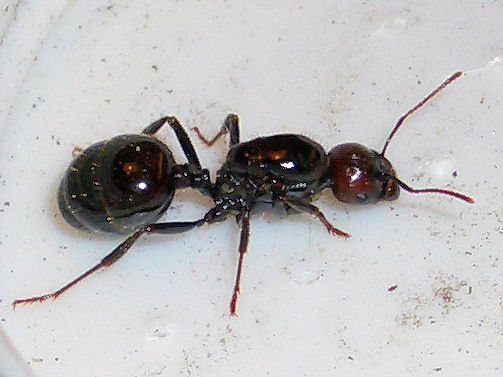

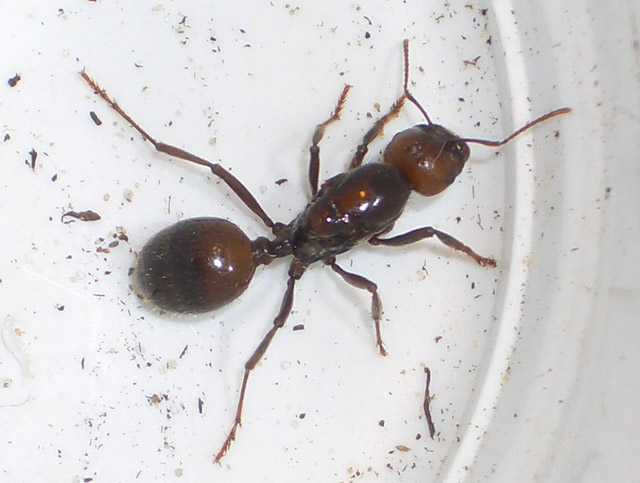

Messor barbarus
Messor barbarus is a Myrmicinae with minor- till major-worker with all passings. Great colonies carry on long "highways" their seeds into the nest. They storing the seed in different granaries and prepare in "chew-communities" the so-called ant bread especially for the colder season. They lay out an trash-accumulation.
- Taxonomy: Myrmicinae
- Color: black, sometimes red brown heads
- Size: Queen 14 - 16 mm
- Distribution: South Europe
- Nutrition: Mostly seeds from different rampant plants (also grass), but insects and honeywater too
- Temperature: 25 - 30 °C
- Hibernation: Yes (slight)
- Air humidity: Dry climate
- Nest building: Soil nests, loam, pebbles
- Planting: nothing specific
- Class: easy to keep
All Messor will be included with untreated hand-picked plant seeds.

Note: Young Queens from current season do not have any offspring (Queens with offspring and/or brood are from last year), they wil lay first eggs in spring.
 Messor barbarus was added to the shopping cart.
 Messor barbarus could not be added to the shopping cart.
| Queen - 7.10 € | |
| Queen (red)
- Currently not available Extra red selection | |
| Queen with brood - Currently not available | |
| Queen (red head) - Currently not available | |
| Small Colony
- Currently not available Contains 5 - 15 workers | |
| Colony
- Currently not available With 15 - 50 workers | |
| Large colony
- Currently not available With at least 100 workers |
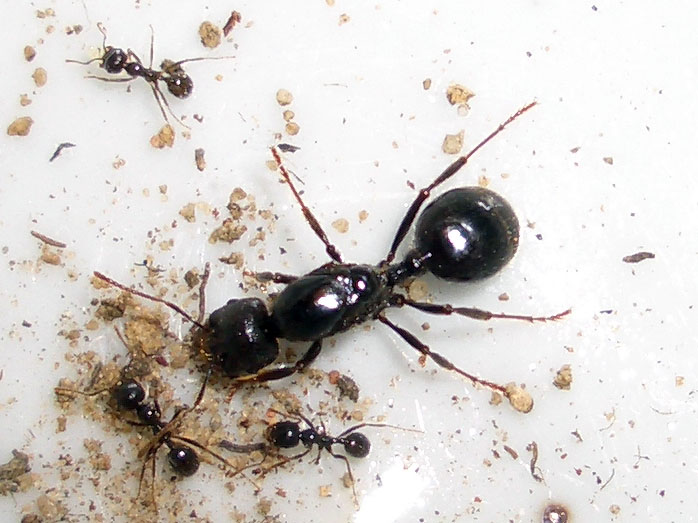
Messor bouvieri

- Taxonomy: Subfamily: Myrmicinae, Tribe: Pheidolini
- Color: black
- Size: Queen 14 - 16 mm
- Distribution: South Europe
- Nutrition: Mostly seeds from different rampant plants (also grass), but insects and honeywater too
- Hibernation: Yes (slight)
- Air humidity: Dry climate
- Nest building: Soil nests
- Planting: nothing specific
- Class: easy to keep
Messor bouvieri was added to the shopping cart. Messor bouvieri could not be added to the shopping cart.| Colony
- Currently not available Contains 30 - 50 ants |

Messor cf. ebeninus
A black colored messor species that can be found in Middle East and North Africa. For that reason this species don't require an extensive hibernation phase and so can be kept warm or at room temperatur in winter.
- Taxonomy: Subfamily Myrmicinae, Tribe Pheidolini
- Color: black
- Size: Worker: 4-11 mm, Queen: 12-13 mm
- Distribution: Middle East, Northern Africa
- Characteristics: polymorph, monogyne
- Nest building: Soil nests, often under stones
- Nutrition: Mostly seeds from different rampant plants (also grass), but insects and honeywater too
- Temperature: 16- 25°C (Mediterranean)
- Hibernation: No
- Air humidity: dry
- Planting: nothing specific
All of our Messor will be shipped with a small container of hand-picked plant seeds that are most popular for the Messor.
Messor cf. ebeninus was added to the shopping cart. Messor cf. ebeninus could not be added to the shopping cart.| Small colony
- Currently not available With up to 30 workers | |
| Colony
- Currently not available With 50 workers |


Messor cf. meridionale
A dark brown colored messor species from Greece. This species don't require an extensive hibernation phase and so can be kept warm or at room temperatur in winter.
- Taxonomy: Subfamily Myrmicinae, Tribe Pheidolini
- Color: drak brown
- Size: Worker: 4-11 mm, Queen: 12-13 mm
- Origin: Greece
- Characteristics: polymorph, monogyne
- Nest building: Soil nests, often under stones
- Nutrition: Mostly seeds from different rampant plants (also grass), but insects and honeywater too
- Temperature: 20 - 25°C (Mediterranean)
- Hibernation: No
- Air humidity: dry
- Planting: nothing specific
All of our Messor will be shipped with a small container of hand-picked plant seeds that are most popular for the Messor.
Messor cf. meridionale was added to the shopping cart. Messor cf. meridionale could not be added to the shopping cart.| Small Colony
- Currently not available With 10 - 30 workers | |
| Large Colony
- Currently not available With about 60 - 80 workers | |
| Colony
- Currently not available 30 - 60 |


Messor cf. orientalis
Oriental Messor species which doesn't need hibernation. This species is also active in cool season in their range. It is significant easier to keep this species than for example Messor barbarus and they subsist on seeds, honey-/sugar water but also insects (similar to many Pheidole species). A typical identifiers is the caldera formed nest entry. They will often be found in sand or loamy sand. The shape of the body is slimmer than of Messor barbarus and the color of the workers is brown till black. The queen is colored black with brown legs.
- Taxonomy: Subfamily Myrmicinae, Tribe Pheidolini
- Color: Workers: darkbrown, Queen: black with brown legs
- Size: Queen 11 - 13 mm
- Distribution: Orient (Asia Minor)
- Characteristics: polymorph
- Nest building: Soil nests, often in sand or under stones
- Nutrition: Mostly seeds from different rampant plants (also grass), but insects and honeywater too
- Temperature: 22 - 30 °C
- Hibernation: No
- Air humidity: Dry climate
- Planting: nothing specific
- Level: very easy to keep
Messor cf. orientalis was added to the shopping cart. Messor cf. orientalis could not be added to the shopping cart.| Queen - Currently not available | |
| Colony
- Currently not available Contains 30 - 50 ants | |
| Large colony
- Currently not available With 150 - 200 workers |

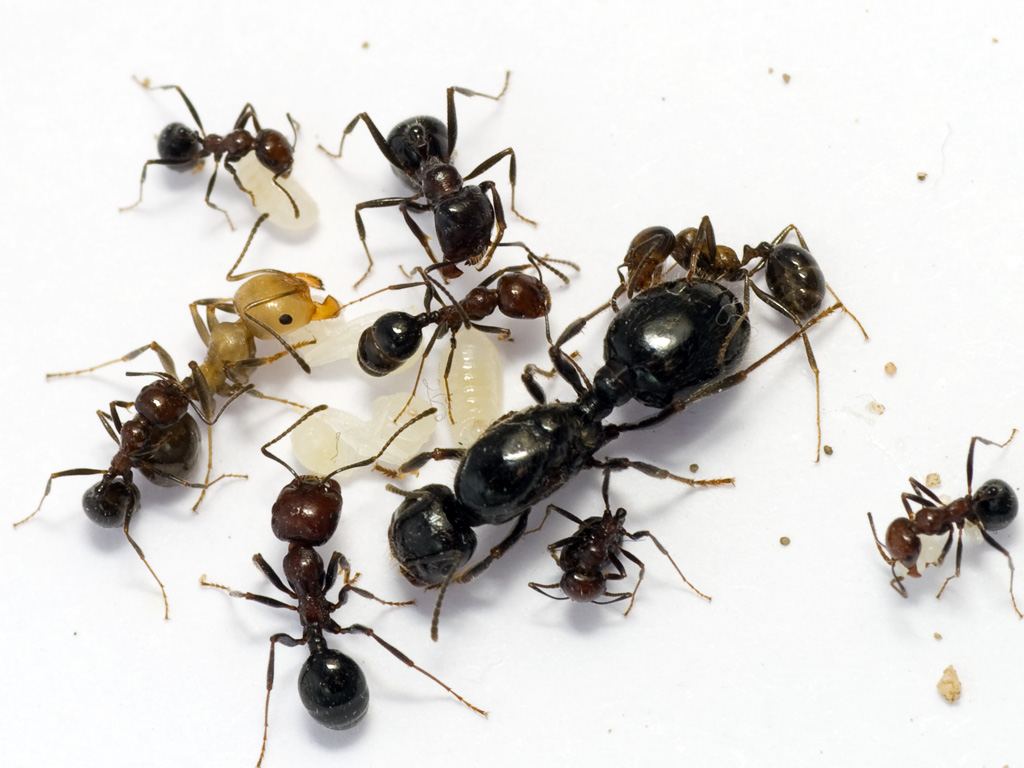
Messor minor hesperius
Beautiful brown-black colored messor species which is also known as Messor minor hesperius.This species can be found in low lands and also in mountains and don't requires hibernation phase.
- Taxonomy: Subfamily Myrmicinae, Tribe Pheidolini
- Color: Workers: brown with black abdomen, Queen: black
- Size: Worker: 4-11mm, Queen: 12-13mm
- Distribution: Macronesia
- Characteristics: polymorph
- Nest building: Soil nests, often under stones
- Nutrition: Mostly seeds from different rampant plants (also grass), but insects and honeywater too
- Temperature: 22 - 30 °C (Mediterranean)
- Hibernation: No
- Air humidity: 50-65% (mountains)
- Planting: nothing specific
Messor minor hesperius was added to the shopping cart. Messor minor hesperius could not be added to the shopping cart.| Small colony
- Currently not available Queen with 10-20 workers | |
| colony
- Currently not available With 30-50 workers | |
| Large colony
- Currently not available With 100 workers |
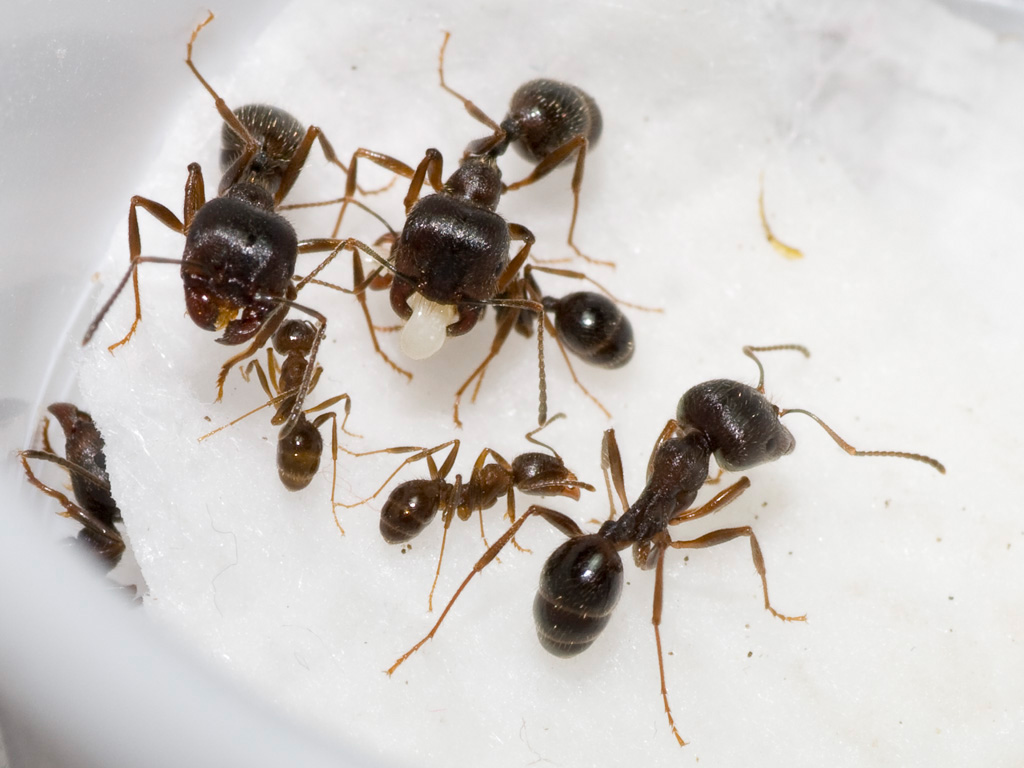

Messor structor
Messor structor is a Myrmicinae like Messor barbarus with minor- till major-worker with all passings. Great colonies carry their seeds on long "highways" into the nest. They stores the seed in different granaries and create so-called ants bread in "chew-communities" especially for the colder season. They lay out an trash-accumulation. In contrary to other Messor species this species is polygyn i.e. has several Queens.
- Taxonomy: Myrmicinae
- Color: black
- Size: Queen 14 - 16 mm
- Origin: South France
- Nutrition: Mostly seeds from different rampant plants (also grass), but insects and honeywater too
- Temperature: 25 - 30 °C
- Hibernation: Yes (slight)
- Air humidity: Dry climate
- Nest building: Soil nests, loam, pebbles
- Planting: nothing specific
- Class: easy to keep
All of our Messor will be shipped with a small container of hand-picked plant seeds that are most popular for the Messor.
Messor structor was added to the shopping cart. Messor structor could not be added to the shopping cart.| Colony
- Currently not available With several Queens | |
| Colony
- Currently not available With 30-50 workers |
RENDERING: 47 ms, LOADING: ? ms
Article number: meba0001
Category: Ants